Is Mold Taking Over Your Home?
Is that musty smell getting stronger? Do you see dark spots on a wall, a ceiling or inside a closet? Take a breath. Mold is common in the Seattle area, and it is a problem you can sort out one step at a time.
Regionpayments Mold Help is a referral service. We do not do the work ourselves. We connect homeowners in Seattle with independent local providers who handle mold inspection, testing and cleanup. You tell us what is going on. A provider in our network takes it from there.
Why act early? A small patch is easier to deal with than a spread-out one. Doing the job right also protects your home. Dry, clean framing and healthy walls help a house hold its value when it is time to sell.
Not sure where to begin? Here is a simple path:
- Notice the signs: a smell, stains, peeling paint or damp spots.
- Ask a provider to take a look and, if needed, test.
- Get a written plan and quote.
- Let the provider clean up and help fix the cause of the moisture.
Want to talk it through? Request a callback to check provider availability in your area.
Request an Estimate
Prefer to start by writing things down? You can request an estimate and keep it simple.
Request an Estimate
How It Works
What does Regionpayments Mold Help actually do?
Good question. We are a referral service, not a mold company. We do not send anyone to your door, and we do not do any testing or cleanup. We match homeowners with independent providers in Seattle and nearby towns. Each provider runs their own business, sets their own prices and does the work.
What happens when I reach out?
You share a few details about what you see or smell. Then you send a request for an estimate. You can also Request a callback to talk it through. A local provider can contact you to discuss the problem, answer questions and plan a visit. You are never required to hire anyone.
Why does the quote matter so much?
Mold jobs vary a lot. Size, location and the cause of the moisture all change the price. A written quote lists what is included, so you can compare options and avoid surprises.
What should I ask a provider?
It helps to ask a few things up front:
- How will you find the moisture source?
- Do you offer mold testing, and who does the lab work?
- What does the cleanup plan include?
- How will you confirm the job is done?
A careful provider will happily explain each step. That kind of clarity protects your home and its future resale value.
Serving Seattle and Beyond
Do you live near Seattle? Then you are probably in range. Providers in our network cover Seattle and the wider the Seattle area, including older neighborhoods and newer developments.
The local climate matters here. Long wet seasons, steady rain and mild temperatures keep many homes damp. Moss on the roof, fogged windows and a clammy crawl space are common clues. Wood-frame houses, craftsman homes and newer townhomes can all hold moisture in different spots.
Searching for mold inspection near me? A local provider already knows how homes in this region tend to get damp, so they know where to look first.
Wondering if your address is covered? Request a callback to check provider availability for your street.
Request an Estimate
Or send your details and ask for a price. A provider will review them and reply.
Request an Estimate
Answers for Homeowners Dealing With Mold
Is it really mold?
Maybe. Fuzzy or dark patches, a musty smell and peeling paint are all hints. Only an inspection and sometimes a test can say for sure. Looks can fool you, since dirt and mold can seem alike.
Why is mold so common in a wet climate?
Long rainy seasons keep air and building materials damp. Mild temperatures mean mold has little reason to slow down. Moss outside is often a sign that moisture sits around your home too.
What about crawl spaces?
Many wood-frame homes have them. They can trap humidity, and mold may grow on joists and subfloors without you seeing it. A provider can check vapor barriers, vents and drainage.
Do older craftsman houses face special issues?
Often, yes. Older walls, windows and roof details may leak in small ways. Hidden moisture can sit behind plaster or siding for years before a stain shows up.
And newer townhomes?
Shared walls, tight construction and bathroom fans that are too weak can lock moisture in. Small plumbing leaks can also travel between units.
What is black mold, and should I panic?
No panic needed. "Black mold" is a popular name for dark molds. Color alone does not tell you how risky it is. A provider who handles black mold remediation will contain the area, remove affected material and treat the cause.
What does it typically cost?
In the U.S., an inspection or test often runs a few hundred dollars up to about a thousand. Residential mold removal can range from under a thousand dollars for a small area to several thousand for larger jobs. Prices vary by job, so always get a written quote.
Will insurance help?
Some policies may cover sudden damage, such as a burst pipe. Slow leaks are often treated differently. Check your policy, and know that providers can often help document damage for a claim.
How do I protect my home's value?
Fix the source of the moisture, not just the stain. Keep records of the inspection, the cleanup and any follow-up checks. Buyers and inspectors like to see that kind of paperwork.
Talk to a Provider
Ready to take the next step? You do not need to have everything figured out. Just share what you have noticed, and a local provider can help you plan.
Request a callback to ask about provider availability near you.
Request an Estimate
Or send a request and compare what comes back. There is no obligation.
Request an Estimate
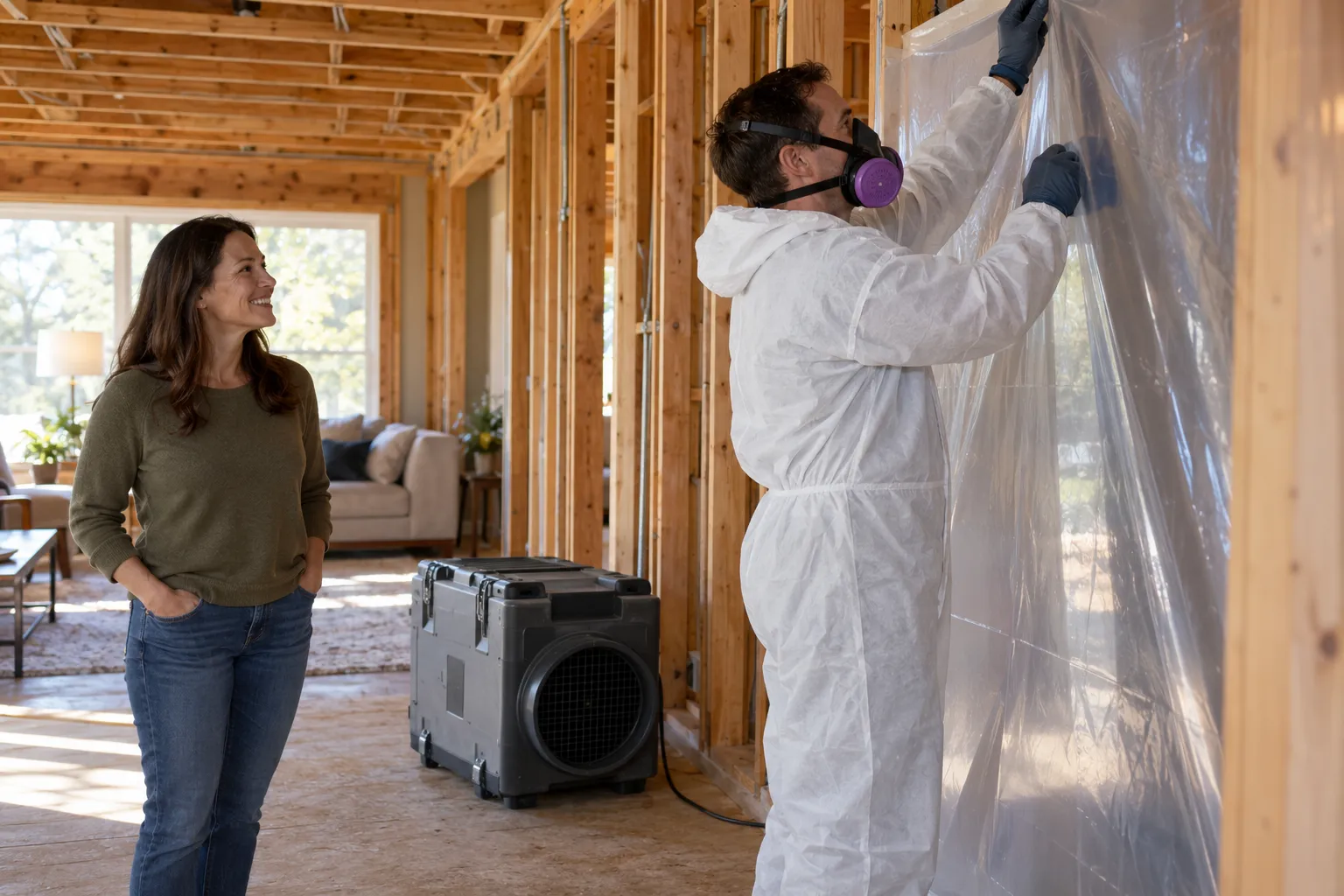 Mold RemediationSeeing or smelling mold is stressful, but a local provider can find the cause and clean it up properly.
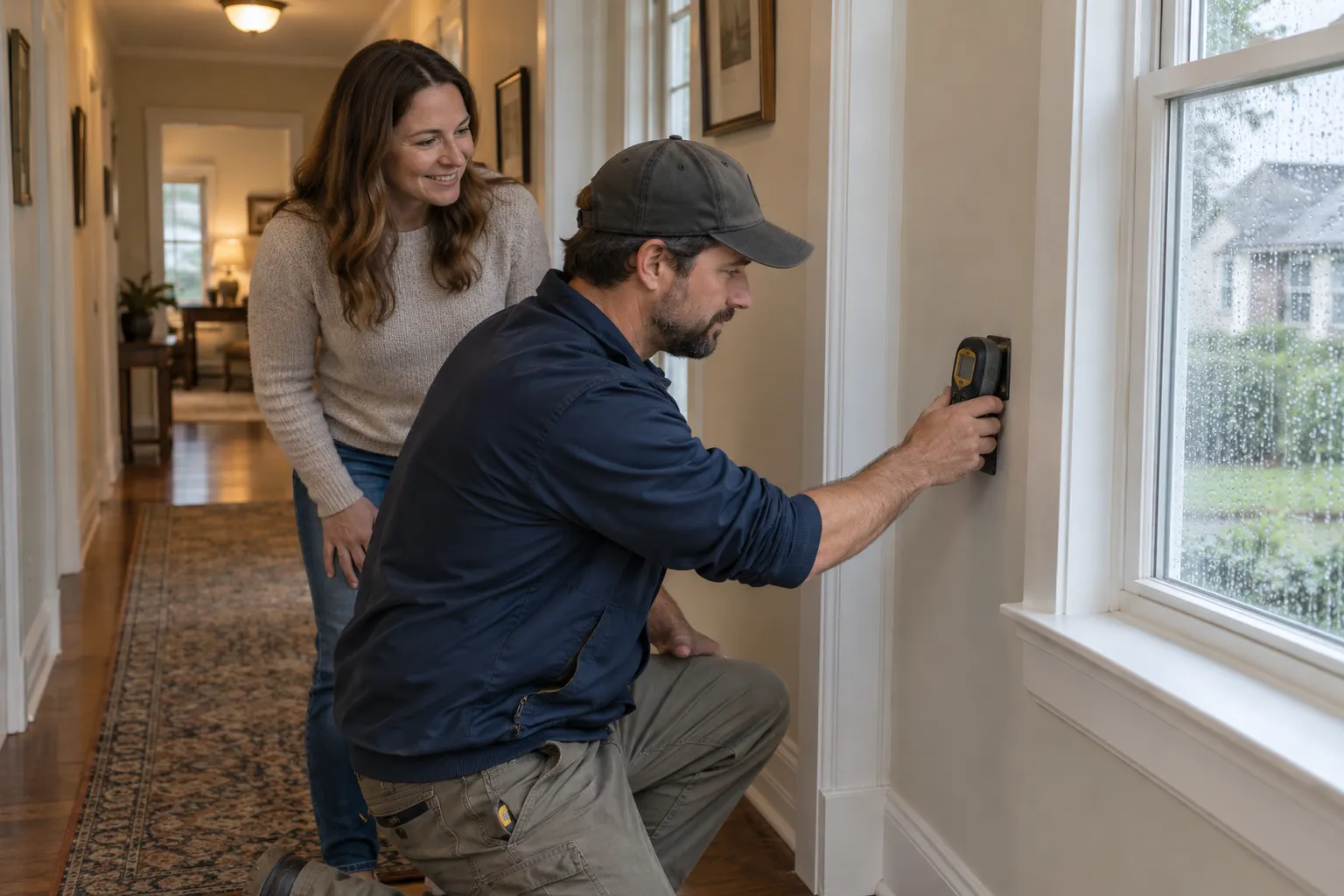 Mold Inspection & Testing ServicesA local provider can check your home, test the air and surfaces, and explain the results in plain words.
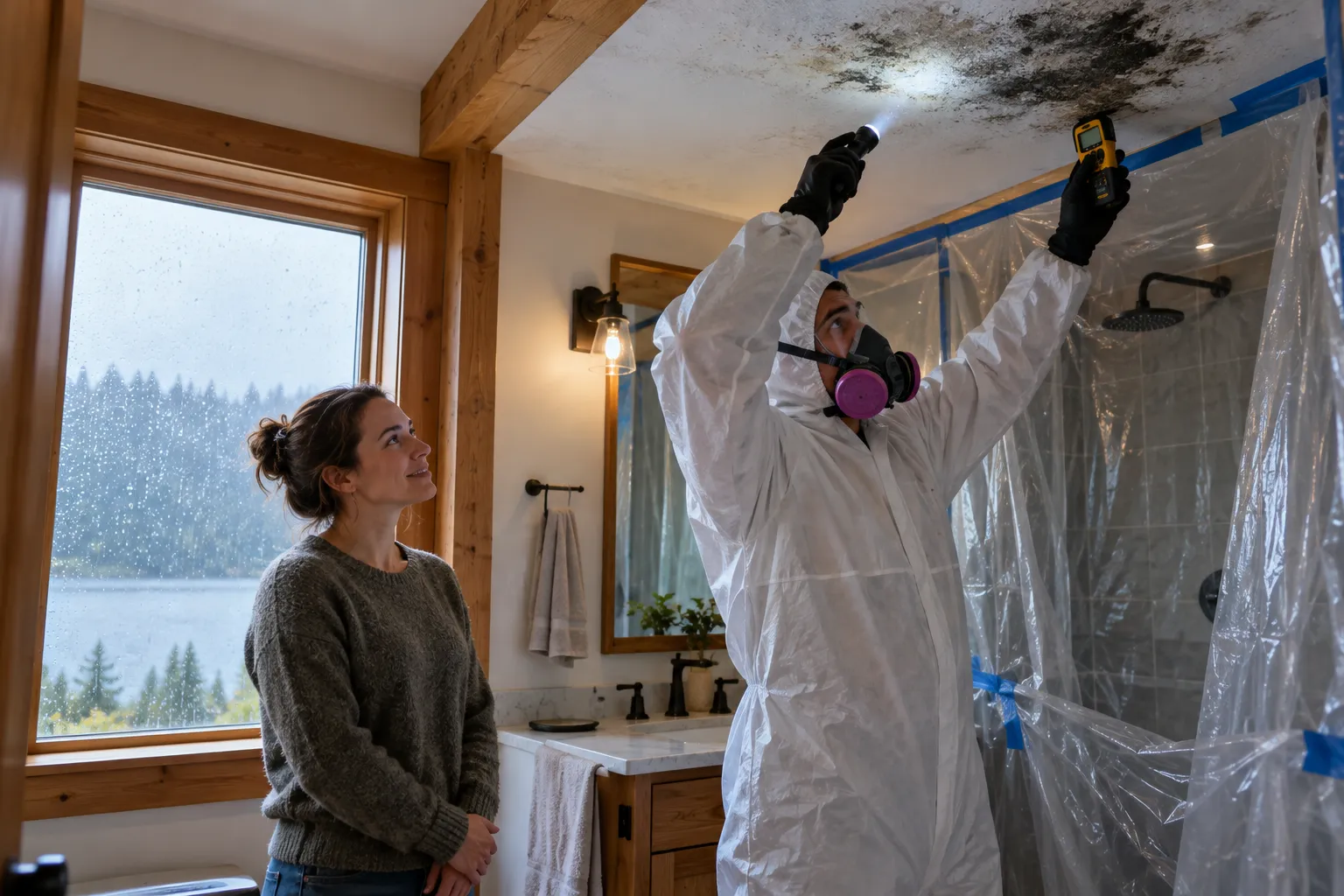 Black Mold RemovalSpotted dark mold at home? Independent local providers can check it, remove it and help fix the cause behind it.